
How to Choose the Right Air Duct Cleaning Company in West Valley City
The fastest way to choose the right air duct cleaning company in West Valley City is to ask two questions before you book: what specific equipment are they bringing into your home, and do they follow the NADCA ACR standard? A company that can answer both clearly, inspect your system in person, and show you its credentials is worth more than a low coupon price. If you’d rather skip the vetting and talk to a specialist, call (833) 749-0886 for a free estimate.
Most homeowners start this search the same way: they noticed dust settling faster than usual, someone in the house started sneezing, or an HVAC technician mentioned the ducts looked rough. Then they open a search results page, see a dozen companies offering nearly identical promises, and pick the one with the brightest star rating. That’s the wrong test. Price and popularity don’t predict whether your ducts get genuinely clean.
Key Takeaways
- Ask whether they use a negative air machine with HEPA filtration plus a rotary brush or pneumatic whip. Vague answers are a red flag.
- NADCA ACR is the written standard for how ducts should be cleaned. Confirm the company actually follows it, not just claims membership.
- A legitimate company inspects your system before quoting a final price. Flat phone quotes without questions are guesses.
- A focused duct specialist trains deeper and buys better equipment than a general cleaning company that adds ducts as a side line.
- Check Utah DOPL licensing for HVAC-adjacent work, ask for a certificate of insurance, and request references from homes similar to yours in West Valley City.
What Equipment Should a Duct Cleaning Company Actually Use?
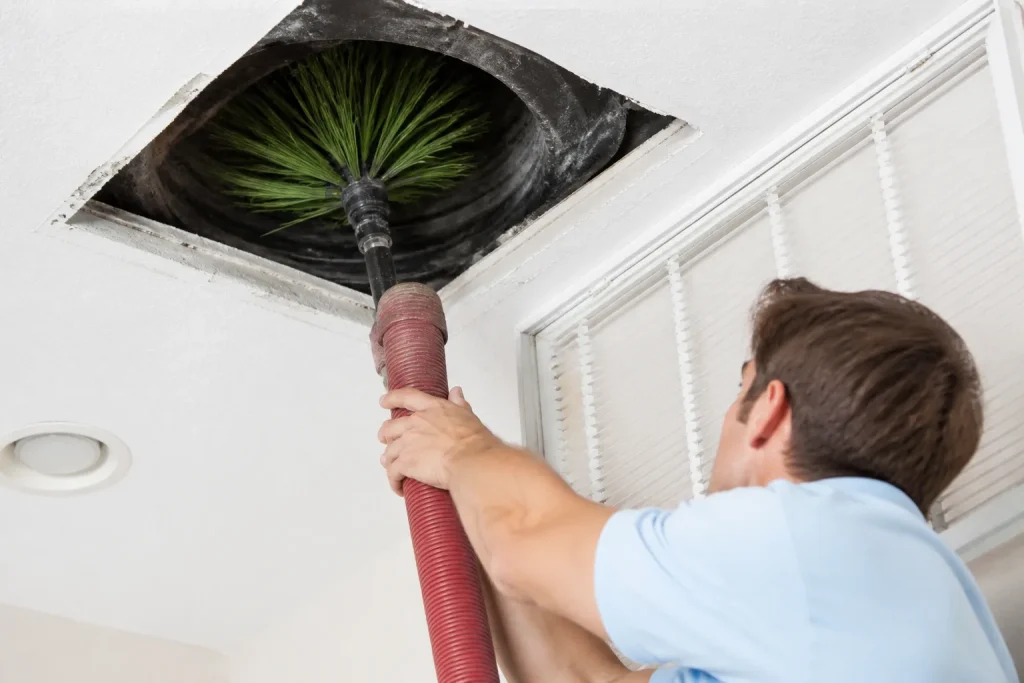
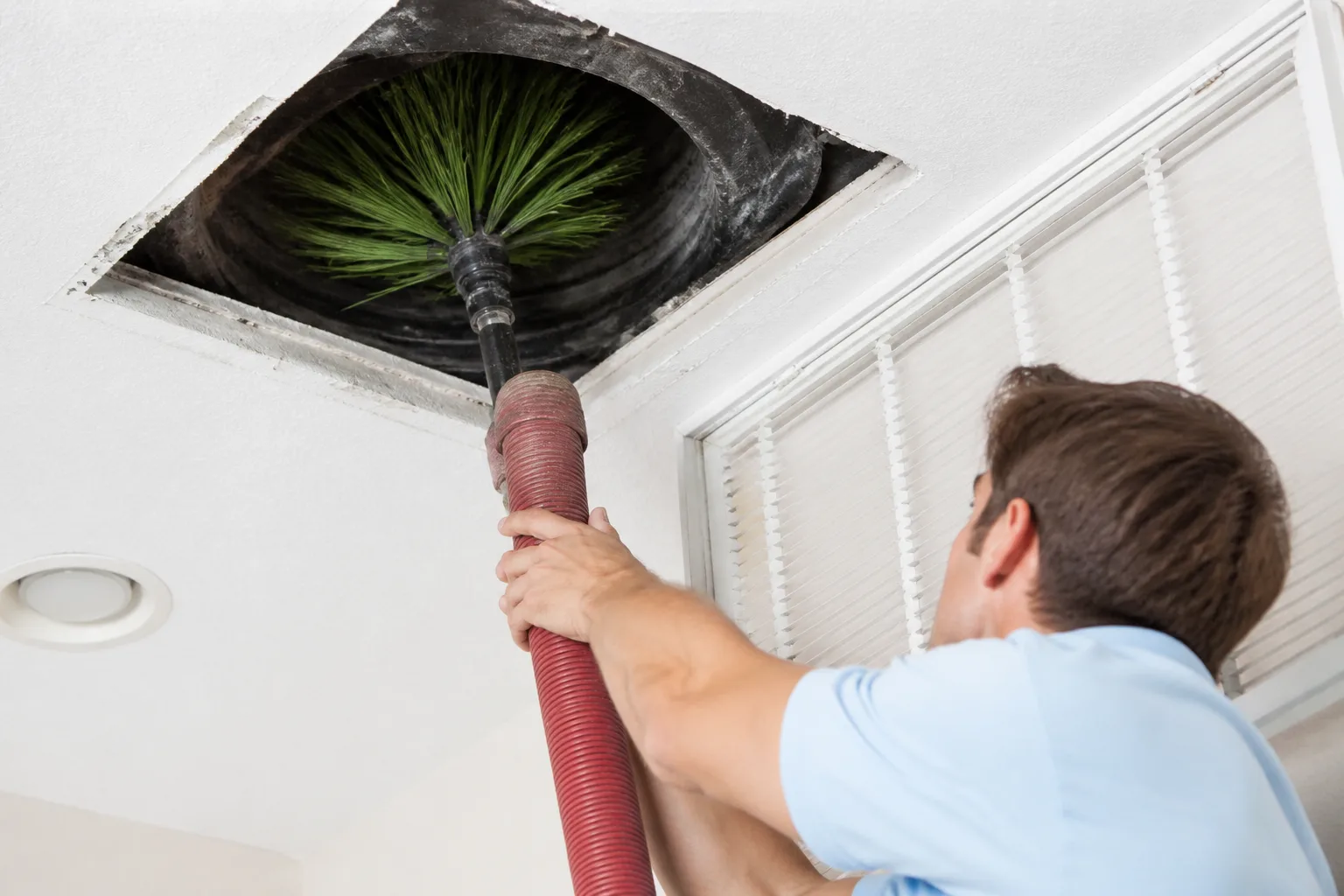
A company worth hiring uses a negative air machine with HEPA filtration combined with either a rotary brush or a pneumatic whip system. Both are standard professional tools for source removal. If the answer you get back is a loose phrase about “professional equipment,” ask again with specifics.
Here’s why the equipment question matters so much in West Valley City. This is a valley that sees a lot of windblown dust and inversions in winter, so ducts here accumulate a mix of fine particulate and settled debris. Cleaning that properly means pulling material out under controlled negative pressure, not blowing it around inside the house. A HEPA-filtered negative air machine keeps the captured material contained. A rotary brush or whip agitates the duct walls so the debris actually releases. Without both working together, you get a surface pass at best.
We run Rotobrush and Nikro systems, which are the same platforms specified in commercial and restoration work. Those brands matter not because a logo on the machine is impressive, but because the machines do a different job than consumer-grade gear. We also stock and service products from Honeywell and Aprilaire, so filtration capability extends beyond the duct itself when that’s what a home needs.
Ask concrete questions on the phone:
- What negative air equipment do you use, and is it HEPA filtered?
- Do you use a rotary brush, a pneumatic whip, or both?
- Will you show me before-and-after photos of my own ducts?
Vague answers on any of those three are your cue to keep looking.
What Does the NADCA ACR Standard Actually Require?
The NADCA ACR standard defines the process for Assessment, Cleaning, and Restoration of HVAC systems. It requires an inspection before cleaning, source removal rather than surface wiping, and verification afterward. Many companies claim to follow it; fewer can explain what it says.
That distinction is worth understanding. NADCA membership itself costs a company about $900 a year and requires passing a written exam, which does filter out the most transient operators. The exam proves the company knows the standard. It doesn’t guarantee the technician at your door has personally cleaned a duct system to that standard. That’s why you ask questions rather than trust a badge.
Three questions separate the companies that follow ACR from the ones that simply cite it:
- Will you inspect my system before cleaning? ACR begins with an assessment. If they’re already quoting a final number before seeing anything, they’re skipping that step.
- How do you verify the work afterward? A proper job includes a post-clean check, not just a look down a vent. Ask how they confirm debris removal was complete.
- Do you clean the entire system or just the visible runs? Source removal covers the full duct network, registers, and the components that collect debris, not only the trunk line you can see from the hallway.
In our experience, a technician who can answer all three without hesitation is someone who has been trained on source removal rather than a script. That training depth is exactly what separates a specialist from a generalist. For a deeper look at what a full cleaning involves, see air duct cleaning in West Valley City.
Why Does a Focused Specialist Beat a General Cleaning Company?
A general cleaning company that adds duct service as a side line structurally cannot match a focused specialist. The gap shows up in three places: technician training, equipment investment, and diagnostic knowledge. Each one affects the result you get in a West Valley City home.
Training first. A company that cleans ducts every working day builds a technician’s eye for duct material, layout, and airflow problems. A company that also does carpets, windows, and gutters spreads that training thin. A crew cross-trained on five services has a fraction of the duct-specific hours.
Equipment second. Professional-grade duct machines are a real capital expense, and companies justify them only when duct work is the core of the business. A company that offers ducts occasionally has no reason to buy Rotobrush or Nikro systems. The equipment follows the focus.
Diagnostic knowledge third. Specialists learn to spot compromised connections, crushed flex runs, and gaps that leak conditioned air into a crawl space. A generalist cleans what’s visible and moves on. We repair what others walk past, because cleaning a system with a broken joint just means cleaning it twice.
This is why our service menu stays tight: air duct cleaning, dryer vent cleaning, and air duct repair. That narrow scope means every technician is trained specifically for ductwork. One specialist, three problems solved, with no scope creep into unrelated trades.
One more point worth raising here. Dryer vent cleaning isn’t optional maintenance, it’s a fire-safety task. If you’re already talking to a duct company, ask whether they handle it. You can read about that side of the work here: dryer vent cleaning.
When to Call a Pro
If you’ve pulled a vent cover and found heavy buildup, if an HVAC tech flagged the ducts during service, or if you’ve just bought a West Valley City home and don’t know when the ducts were last cleaned, that’s the moment to get an inspection. High-tension components, gas lines, and electrical panels near ductwork are not DIY territory. Trained professionals should handle anything that puts your hands near those systems.
What Should an In-Home Inspection Tell You Before You Commit?
A legitimate company inspects your system before quoting a final price. Anyone who quotes a flat rate over the phone without asking about duct material, system layout, or the last cleaning date is guessing, and their number will likely change once a technician is standing in your hallway.
Here’s what a real inspection covers, and what the answers tell you:
- Duct material: Flexible, rigid metal, and ductboard systems each hold debris differently. A tech who asks knows the cleaning approach changes with the material.
- System layout: How many runs, where the trunk lines are, whether there’s a return-side access point. Layout determines equipment and time.
- Last cleaning date: A home that’s never had the ducts cleaned is a different job than one cleaned a few years ago.
- Condition findings: Registers, dampers, and connections. A tech who points out damaged sections is doing the assessment the standard requires.
You should also see before-and-after photos of your own ducts when the job is done. That single practice answers the question every homeowner has after a crew leaves: how do I know the work was actually done? Ask if they photograph as standard, then hold them to it.
If you’re renting the place out or managing multiple properties across West Valley City, the inspection conversation is even more valuable. It gives you a written record of system condition you can hand to a contractor or claims adjuster later.
How Do You Vet a West Valley City Duct Company Locally?
Ask three local questions before you book. First, verify Utah DOPL licensing for any HVAC-adjacent work. Second, request a certificate of insurance showing general liability coverage and confirm it’s current. Third, ask for references from homes with a similar duct layout to yours in West Valley City, not just glowing aggregate stars.
On licensing: the Utah Division of Occupational and Professional Licensing regulates HVAC work, and duct service can touch that scope. Ask for the license and confirm it’s active. Contractors who carry proper licensing are usually happy to provide the number. Contractors who hesitate are telling you something.
On insurance: a certificate of insurance should name general liability coverage. That protects you if something goes wrong inside your house. Call the number on the certificate to confirm the policy is active rather than expired. A company that can’t produce a current certificate is a company you skip.
On references: aggregate star ratings mix together customers with wildly different homes. A five-star review from someone with a 900-square-foot condo tells you little about how a crew handles a two-story house with a finished basement and long flex runs. Ask for names of neighbors in similar housing, or ask a question that references your own system’s layout and see how specifically the company responds. Reviews are useful; references for your home type are better.
West Valley City has a wide range of housing, from older ranch homes to newer builds, and ductwork reflects that. A company that has worked across those types will spot problems a one-size-fits-all operator misses. Getting to know the area means getting to know its housing stock, and that’s the local layer of this decision. You can learn more about our work across West Valley City.
Why Are Some Quotes So Much Cheaper?
A dramatically lower quote usually reflects one of three shortcuts: no inspection before quoting, equipment that isn’t built for source removal, or technicians paid to move fast rather than clean well. The price looks like a bargain until a second crew has to come back and do the job properly.
Here’s the pattern we see most often. A teaser price gets the crew through the front door, then a different, larger number gets presented once they’re inside the house. We handle it the opposite way: one flat price per system, agreed before work starts, with no per-vent pricing. You know the total before anyone touches a vent, and the written estimate sets the final price. That’s the answer to the industry’s bait-and-switch reputation.
Typical whole-system cleaning in the West Valley City area runs within a range that depends on system size, layout, and condition. Call for an exact quote; estimates are free. If a competitor’s number is far below everyone else’s, ask what equipment they’re using and whether the quote includes an inspection. The honest answer, or the lack of one, tells you plenty.
The Bottom Line
Choosing the right duct cleaning company in West Valley City comes down to verifying what matters: the specific equipment they deploy, whether they follow the NADCA ACR standard, whether they inspect before quoting, and whether their licensing and insurance check out. Price and star ratings are easy to see and easy to get wrong. The equipment and the standard are the two factors that actually predict job quality, and both are verifiable before you commit.
Our technicians have up to 8 years of experience, and we run professional-grade systems from Rotobrush and Nikro because we focus tightly on ductwork rather than spreading across every cleaning service. We can also work with your insurer if a project needs it.
If you’re in West Valley City and need help, Oakridge Air Duct Cleaning offers free estimates – call (833) 749-0886. We answer 24/7. Fast dispatch from 7am to 7pm, Sunday through Friday.
Frequently Asked Questions
It depends on system size, layout, and condition, so you’ll want a written estimate for your home. A whole-system cleaning typically falls within a range set by those factors, and the written estimate sets the final price. Call (833) 749-0886 for an exact quote – estimates are free.
Cheaper quotes usually skip the pre-inspection, use consumer-grade equipment, or count on a larger number once the crew is inside your house. Ask what equipment they use and whether the price covers a full inspection. Call (833) 749-0886 for an honest whole-system estimate.
Ask for before-and-after photos of your own ducts, not stock images. A legitimate company photographs the work as standard and can show you the pre-clean condition of the system. If you’re unsure about a job that’s already done, call (833) 749-0886 and we can walk you through what a proper assessment looks like.
There’s no fixed schedule that fits every home. It depends on the system, the household, and conditions in your area. If someone in the house has allergies, you’ve had recent renovation work, or you don’t know the last cleaning date, that’s usually the signal to get an inspection. Call (833) 749-0886 to schedule one.
Sometimes. If a crushed run or a disconnected joint is the cause, cleaning alone won’t solve it. That’s why we offer air duct repair alongside cleaning: cleaning clears the system, repair restores it. If your airflow feels off, call (833) 749-0886 to have the system assessed.
Look for Rotobrush or Nikro duct systems, which are built for source removal, and evidence the company handles filtration and purification products from brands like Honeywell, Aprilaire, or Abatement Technologies. The equipment brands tell you how seriously the company invests in duct work. For more on what we use, see Oakridge Air Duct Cleaning.
Written by the team at Oakridge Air Duct Cleaning.
Need Air Duct Cleaning Help?
Call Oakridge Air Duct Cleaning - licensed & insured, here with fast help in West Valley City.
(833) 749-0886