
Last updated November 14, 2026
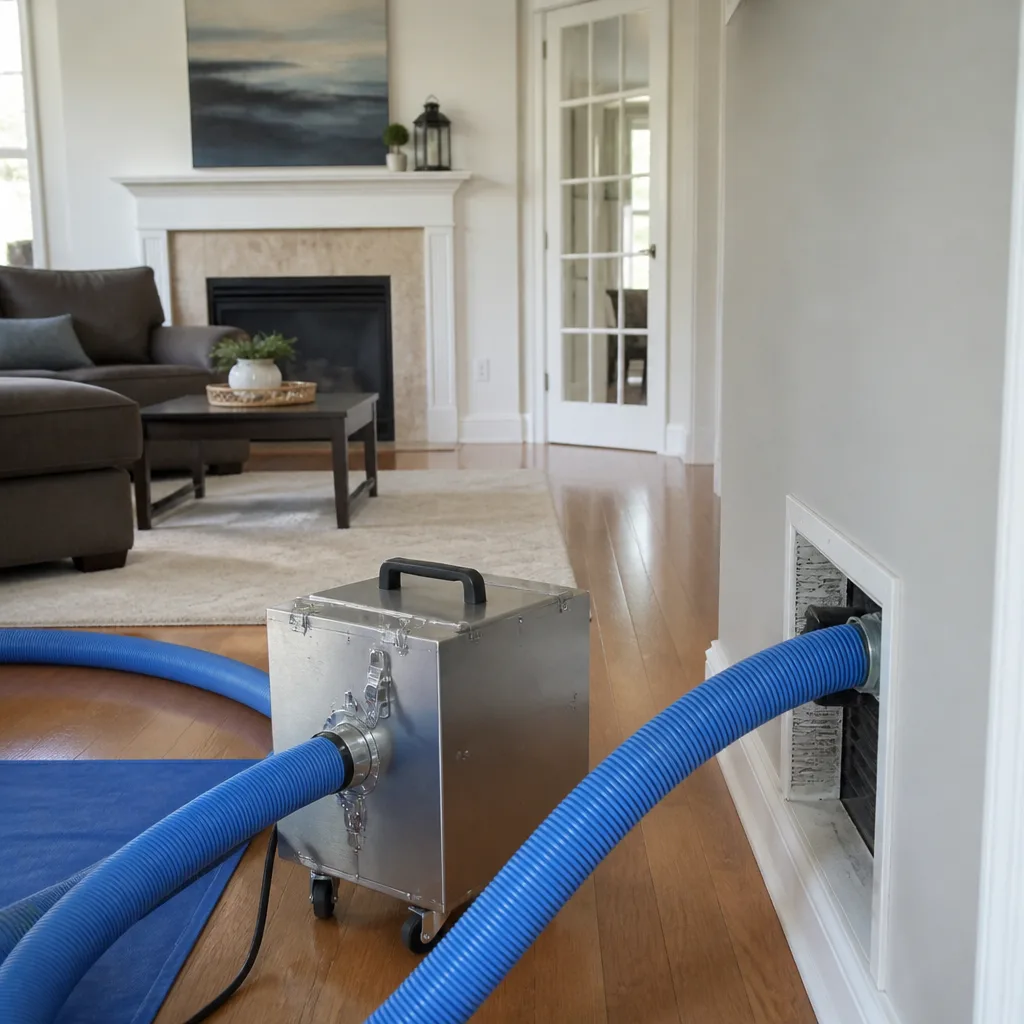 Whole-home duct cleaning
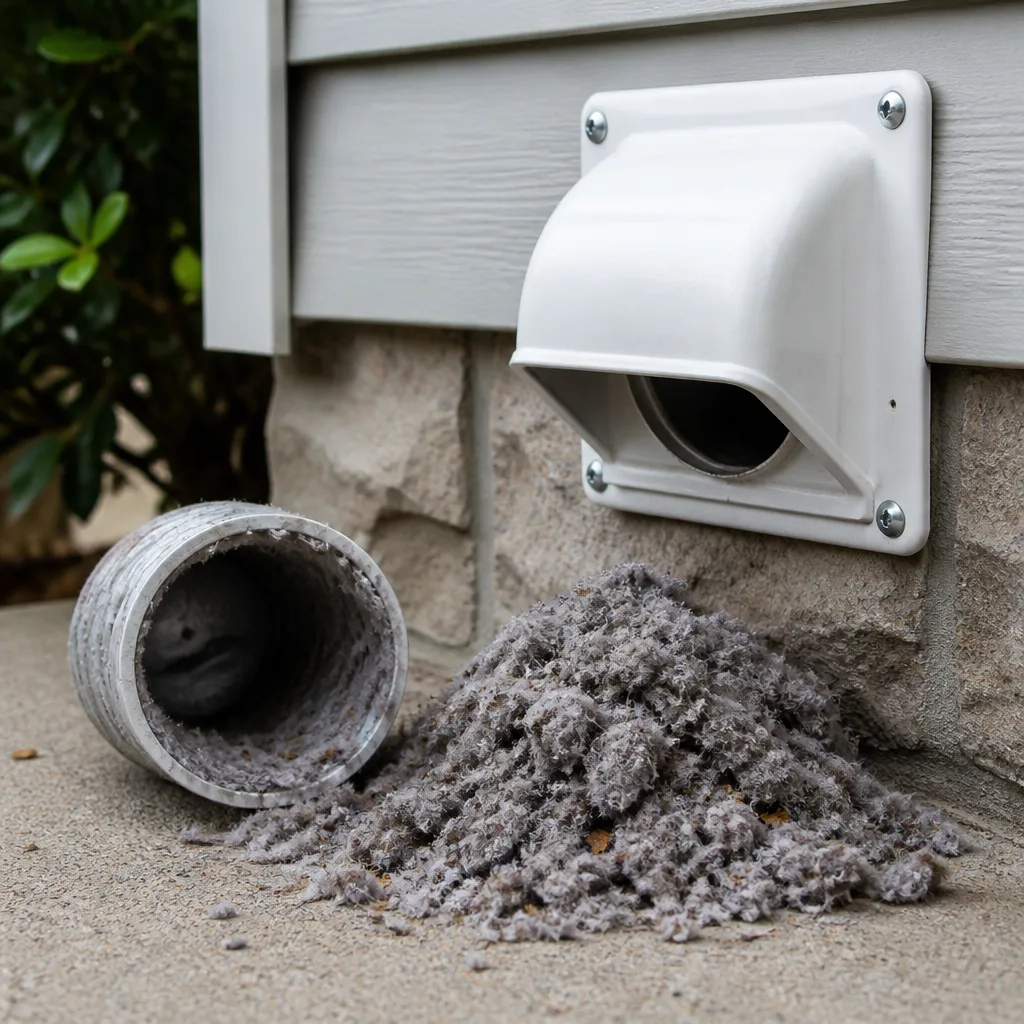 Dryer vent cleaning
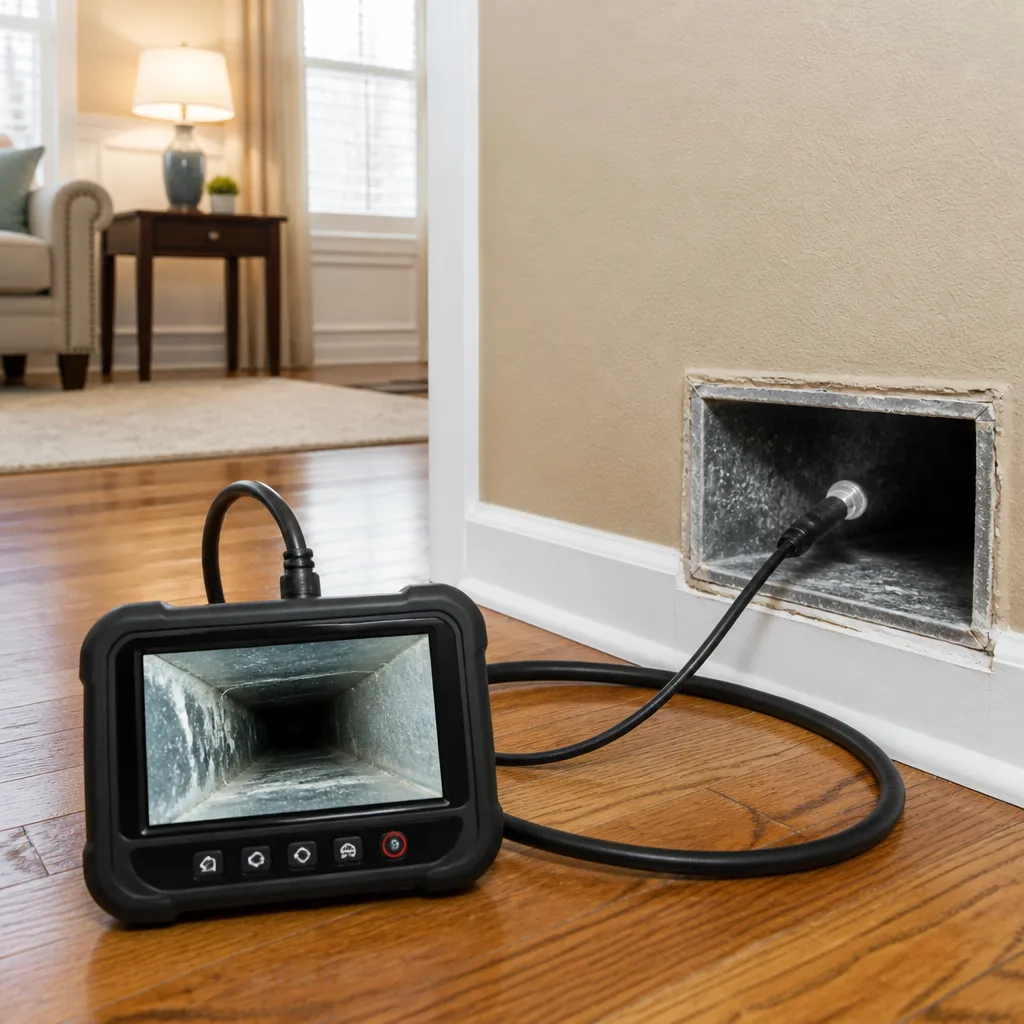 Camera inspection
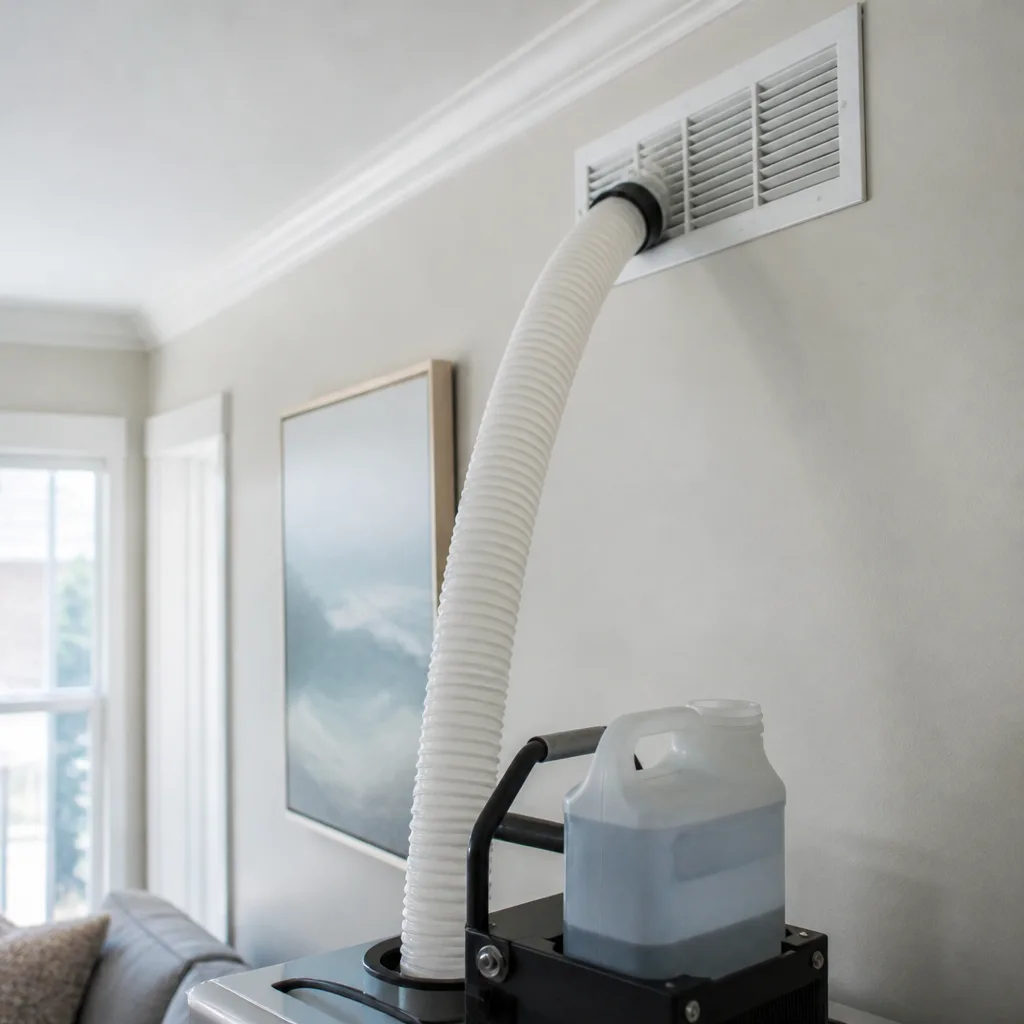 Sanitizing & deodorizing
Whole-system duct and dryer vent check with before-and-after photos - you see exactly what came out of your vents
That "$99 whole-house special" is a bait ad - the real number appears once they are in your hallway, or the "clean" is a shop-vac at the register. We photograph the inside of your ducts before and after instead.
The Complete Guide to Air Duct Cleaning in West Valley City
Most homeowners assume duct cleaning is a once-a-decade chore, something you get to after the carpet and the gutters. In a valley basin with inversion seasons, that assumption costs you air quality for years. The dust that settles in West Valley City ductwork is mineral-heavy and alkaline, it clings to galvanized steel and flex lining instead of blowing through, and it builds up faster during winter stagnation than most national guides ever acknowledge. This guide covers what that buildup actually does inside your system, what professional equipment does that a shop vac cannot, how to verify the job was done right, and how to know when cleaning is genuinely due. It’s written for homeowners and property managers in West Valley City who want a straight answer, not a coupon pitch.
Quick Answer
Air duct cleaning in West Valley City is worth doing when dust, pet hair, or construction fallout has visibly coated your supply and return registers, when a recent HVAC service flagged debris in the system, or when your household deals with allergies that worsen during inversion season. A proper cleaning uses negative-pressure equipment and rotary agitation from professional systems like Rotobrush or Nikro, includes the blower and coil area, and finishes with airflow verification. It is not a shop-vac brush-out of the registers. Expect a whole-system price quoted in writing before work begins, and treat any per-vent teaser price with suspicion.
Styles & brands we work with
- Whole-home duct cleaning
- Dryer vent cleaning
- Camera inspection
- Sanitizing & deodorizing
Table of Contents
- Why West Valley City Ducts Are Different
- Inversion Season and Cleaning Frequency
- What the Dust Is Made Of and How It Behaves
- What Professional Equipment Actually Does
- How to Verify the Cleaning Was Done Right
- Duct Condition and HVAC Efficiency in Utah’s Temperature Swings
- What a Proper Cleaning Looks Like, Step by Step
- What Duct Cleaning Typically Costs in West Valley City
- Common Mistakes to Avoid
- When to Call a Professional
- Frequently Asked Questions
Why West Valley City Ducts Are Different
West Valley City sits in the Salt Lake Valley basin, which means the air your HVAC system pulls in carries a different particulate load than what a homeowner in Denver or Phoenix deals with. The valley traps cold air under warmer layers during winter, holding emissions and fine particulate near the ground for days or weeks. Those particles don’t just hang outdoors. Every time your system runs, it pulls through the return, cycles that same load through the filter and the duct lining, and pushes it back into the rooms. A filter catches some of it. The rest lands on duct walls, where it stays until it’s physically removed.
Add the local building boom. Neighborhoods across West Valley City have seen years of new construction and renovation, and construction fallout is not the same as household dust. Drywall particulate, sawdust, and silica fines are heavier and more abrasive. They settle in the return plenum and the first few feet of trunk line, and they don’t lift off with normal airflow. If your home was built or remodeled while ducts were left uncapped, that debris is still inside the system.
The third factor is housing age. West Valley City’s stock runs from mid-century builds to recent subdivisions, and older homes often have galvanized trunk lines with flex branch runs added during past HVAC updates. Those transitions are where debris collects. They’re also where leaks and disconnected joints show up, which is why air duct cleaning should include a look at the physical condition of the ductwork, not just the inside of the tubes.
Inversion Season and Cleaning Frequency
In a city without inversion cycles, a typical recommendation is a cleaning every three to five years, and many homes can stretch that. In West Valley City, inversion season changes the math. When the valley caps the air for weeks at a time, the same particulate that would normally clear out by afternoon sits in the air and cycles through your home repeatedly. That’s the case for treating duct condition as a seasonal health decision, not a cosmetic one. Dirty ducts act as a reservoir, and during an inversion, every hour the system runs is another pass of the same load through the house.
A practical approach for West Valley City homeowners:
- Homes with allergy or asthma sufferers: assess duct condition before each heating season, and clean when registers show visible buildup or airflow drops.
- Homes with pets or heavy carpet: expect faster accumulation; a check every two to three years is reasonable.
- Recently built or remodeled homes: clean once after construction dust has fully settled, even if the ducts were installed new.
- Homes with a recent HVAC replacement: clean the ducts and inspect for disconnected runs before the new equipment runs a full season.
None of those are hard rules, and any technician who quotes a rigid interval without looking at your system is guessing. The honest approach is to inspect first. In our experience across West Valley City homes, the ducts that need the most urgent attention are rarely the ones the homeowner suspected. The return side, in particular, hides a lot.
What the Dust Is Made Of and How It Behaves
Dust in this valley is alkaline and mineral-rich. That matters because it behaves differently than the organic dust you find in humid climates. Alkaline mineral particulate is fine, slightly abrasive, and prone to clinging to surfaces through a mild electrostatic attraction, especially on galvanized steel and on the foil face of flex duct. It doesn’t blow out of the system under normal airflow. It coats the lining and stays, and each additional layer gives the next round of particulate more to grab.
Three distinct dust types show up in West Valley City systems:
- Alkaline mineral dust from the surrounding desert and disturbed soil. It’s the finest fraction and the one that settles deepest into the lining.
- Construction fallout from local development and renovation, including drywall fines, sawdust, and silica. Heavier, and it collects in the return and trunk.
- Household biological load such as pet hair, skin cells, and fabric fibers. It binds the mineral and construction dust together into mats that won’t shift without mechanical agitation.
That last point is why a brush attached to a shop vac leaves so much behind. The mat has to be broken up before it can be captured. Rotary agitation from a professional system does that. Once the dust is airborne inside the duct, it has to be drawn into a negative-pressure collection system fast enough that it doesn’t escape into the home. That’s the difference between cleaning a duct and stirring it up.
What Professional Equipment Actually Does
A consumer shop vac with a brush kit can reach a register and a few feet of branch run. It cannot generate the negative pressure needed to hold a full trunk line under suction while the lining is agitated, and it has no HEPA capture stage rated for fine particulate. Those two limitations matter more in West Valley City than almost anywhere, because the dust here is fine and mineral-heavy.
Professional systems like Rotobrush and Nikro are built around that problem. They combine a high-volume vacuum with a rotating air whip or brush head on a flexible hose, so the lining is mechanically agitated while under continuous negative pressure. The dust is captured at the source, not pushed into the room. Nikro equipment is common in restoration and commercial work for exactly this reason: it’s rated for contamination-sensitive scenarios. We also work with Honeywell and Aprilaire air-quality products for filtration and humidity control downstream of the cleaning, because cleaning the duct without addressing filtration just resets the clock.
What that means for your home in plain terms:
- The full trunk and branch system can be cleaned under suction, not just the reachable end of each run.
- The blower compartment and coil area can be addressed as part of the job, which is where much of the settled dust actually lives.
- Before-and-after photos of your own ducts can be provided as physical evidence the work happened.
- Fine particulate gets captured rather than redistributed into the rooms during the cleaning itself.
Ask any company what equipment they run before you book. If the answer is a shop vac and a brush, the job will be surface-level regardless of how long the technician spends in the house.
How to Verify the Cleaning Was Done Right
Visual inspection is the starting point, but it’s not enough. A duct can look clean at the register and still have a matted lining twenty feet down the trunk. What separates a real cleaning from a quick surface pass is the airflow check on the other end. Here’s how to verify the work in your West Valley City home:
- Ask for before-and-after photos of your own system. Not a stock photo, not someone else’s duct. Yours, with identifiable features.
- Request an airflow reading before and after. A technician with a manometer or anemometer can measure static pressure at the return and at a supply register. A meaningful improvement in static pressure confirms the system is breathing more freely than it was.
- Check the registers yourself. Run your finger along the inside of a supply register after the clean. If it comes away coated, the branch wasn’t reached.
- Confirm the blower and coil were addressed. These are part of the air path. Cleaning the ducts and skipping the blower compartment leaves a major dust source in place.
- Watch for a filter change at the end. The filter should be new or verified clean when the job closes, not before.
Static-pressure readings are the single most useful verification tool, and most companies don’t offer them. If a company can’t tell you what your system’s static pressure was before and after, that’s a signal. Airflow verification is a standard part of how we close out a job, and it’s fair to expect it from any company doing serious work in West Valley City.
Duct Condition and HVAC Efficiency in Utah’s Temperature Swings
West Valley City runs a wide seasonal temperature spread, which means your HVAC system works hard on both ends of the year. That’s exactly the condition where duct problems show up as energy cost. A disconnected flex run in an attic or crawl space, a crushed branch behind a knee wall, or an unsealed trunk joint doesn’t just leak conditioned air. It pulls unconditioned air from the surrounding cavity into the system, which the blower then has to move through the house. The equipment runs longer to hit the same setpoint, and the ducts that are losing air are also the ones most likely to be pulling dust in from outside the envelope.
The fix is not always cleaning alone. This is where duct repair closes the loop. Cleaning without repairing a torn or disconnected run means the system will foul again quickly, and the efficiency loss continues. Our service covers cleaning, repair, and dryer vent work under one specialty, which means the assessment answers “what’s actually wrong” rather than “what can we clean today.” That matters in West Valley City homes where the duct system has been modified over multiple HVAC replacements across decades.
If your system is short-cycling, your rooms don’t hold temperature evenly, or your energy bills have crept up without a rate change, a duct inspection is a reasonable diagnostic step before you blame the equipment. In many cases the equipment is fine and the distribution is the problem.
What a Proper Cleaning Looks Like, Step by Step
Here’s the general sequence of a professional duct cleaning, so you know what to expect when a technician arrives. Every company’s order of operations differs slightly, but these stages should all be present.
- Walk-through and system assessment. The technician maps the trunk and branches, checks for disconnected or crushed runs, and identifies any ducts that shouldn’t be cleaned until they’re repaired.
- Setup and containment. Negative-pressure equipment is connected, and openings are sealed. This is the stage that prevents dust from being redistributed into the home.
- Register and vent removal. Supply and return registers come off, and the covers are cleaned separately.
- Trunk and branch cleaning. Rotary agitation is run through each branch and the trunk under continuous suction. This is the heaviest part of the job.
- Blower and coil compartment. The air handler area is cleaned and inspected. Many systems hold more debris here than in the ducts.
- Repair of any identified defects. Torn flex, disconnected joints, or crushed runs addressed before the system is reassembled.
- Verification. Airflow and static pressure are measured and compared to the pre-cleaning reading. Photos are captured.
- Filter replacement and walkthrough. The technician walks you through the results and shows the readings.
Typical duration for a single-family home is a few hours depending on system size and how many branches there are. If a company quotes an hour for a whole-house clean, ask what they’re actually cleaning.
What Duct Cleaning Typically Costs in West Valley City
Pricing in the West Valley City market is quoted per system, not per vent, and any company that leads with a per-vent number is setting up a bait-and-switch. A per-vent quote starts low and grows with every branch the technician counts. A whole-system quote covers the trunk, the branches, the blower area, and verification, and it should be given to you in writing before work begins. Below are typical estimated ranges you’ll see quoted in the West Valley City area for common job types. These are estimates only. The written estimate you receive sets the final price.
- Single-family home, whole-system clean: typically $350 to $650, depending on system size and branch count.
- Larger homes or multi-zone systems: typically $550 to $850.
- Duct repair combined with cleaning: varies by scope; the repair is quoted separately and added to the cleaning price.
- Dryer vent cleaning: quoted separately, priced per run length and accessibility.
We quote one flat price per system, agreed before the work starts, so the number you’re given on the phone is the number on the invoice. If anything unexpected turns up mid-job, you’re told before any additional work happens. Anything else is the bait-and-switch model.
Common Mistakes to Avoid
A few patterns show up often enough in West Valley City that they’re worth flagging:
- Booking on a per-vent coupon. A teaser price per vent means the technician will find enough vents to hit the real number, and it usually doesn’t cover the trunk or blower. Ask for a whole-system price in writing before booking.
- Skipping the blower and coil area. Cleaning the ducts without addressing the air handler leaves a major dust source in the system, and the ducts re-foul faster.
- Believing a clean register means clean ducts. The register is the easiest place to reach and the most visually deceptive. Ask for photos of the trunk.
- Skipping repair on damaged runs. A disconnected or crushed branch lets dust and unconditioned air back in. Cleaning without repair means a repeat job inside a year.
- Assuming a new filter fixes dust buildup. A filter catches what’s in the airstream. It doesn’t remove what’s already on the lining. The two are separate jobs.
- Ignoring the return side. In this valley, the return plenum and the first stretch of trunk hold more of the mineral dust than the supply branches. Ask specifically whether the return was cleaned.
- Booking without asking what equipment will be used. Shop vac and brush isn’t a duct cleaning. Ask for the equipment make, and expect an answer like Rotobrush or Nikro.
When to Call a Professional
Some duct conditions are clear enough to act on without a second opinion. Visible dust buildup on the inside of supply and return registers is one. A recent HVAC service call that flagged debris in the system is another. If a renovation or construction effort occurred without the ducts capped, that’s a third. And if your household deals with allergies that visibly worsen during inversion season, an assessment before the heating season is worth the call. You should also call if airflow at the registers has dropped noticeably, if the system short-cycles, or if you smell a musty odor coming from the vents when the fan runs. Those signal either heavy buildup or a repair need. Oakridge Air Duct Cleaning offers free estimates in West Valley City – call (833) 749-0886. We answer 24/7. Fast dispatch from 7am to 7pm, Sunday through Friday.
Frequently Asked Questions
A typical whole-system duct cleaning in West Valley City runs around $350 to $650 for a single-family home, with larger or multi-zone systems typically landing between $550 and $850. Those are estimates, and the written estimate you receive sets the final price. If a company quotes per vent, the number you see advertised isn’t the number you’ll pay. Call (833) 749-0886 for an exact quote – estimates are free.
A cheap quote usually reflects a per-vent price that grows once the technician is in the home, or a job that skips the trunk, the blower compartment, and airflow verification. Neither is a real cleaning. A whole-system price quoted before work begins is the honest model. Call (833) 749-0886 for a written, whole-system estimate.
Before-and-after photos of your own ducts and static-pressure readings taken before and after are the two strongest checks. A technician who can show you what the trunk looked like and what the system’s airflow measured is giving you verifiable evidence, not a verbal report. Airflow verification is a standard part of how we close out jobs in West Valley City. Call (833) 749-0886 to book an assessment.
For most West Valley City homes, an assessment every two to three years is a reasonable starting point, but inversion season and construction fallout make intervals shorter than in non-basin cities. Homes with pets, allergies, or recent remodeling should check more often. The right decision comes from inspecting the system, not from a calendar. Call (833) 749-0886 for a free estimate.
Yes, especially in a valley with Utah’s wide temperature swings. Debris on the lining restricts airflow, the blower works harder, and disconnected or crushed runs leak conditioned air into the surrounding cavity. In our experience, a cleaning and any needed dryer vent cleaning done together often reveal airflow improvements that show up on the next utility cycle. Call (833) 749-0886 for an exact quote.
Yes. Dryer vent cleaning is one of our three services and it’s a genuine fire-safety task, not a comfort upgrade. Lint accumulation in the vent run is the leading cause of dryer-related house fires, and a blocked vent also extends dry times on every load. It’s quoted separately from the duct cleaning based on run length and accessibility. Call (833) 749-0886 to book it.
The Bottom Line
Air duct cleaning in West Valley City is a specific job shaped by valley conditions: mineral-heavy alkaline dust, long inversion seasons, construction fallout, and HVAC systems working hard through a wide temperature range. A proper cleaning uses negative-pressure equipment from systems like Rotobrush or Nikro, covers the trunk, branches, blower, and coil, includes repair of any damaged runs, and closes with airflow verification. It’s quoted per system in writing, not per vent. If you’ve been putting it off, the right starting point is an assessment rather than a coupon. Oakridge Air Duct Cleaning works in Oakridge Air Duct Cleaning‘s home territory of West Valley City with a narrow specialty: clean it, clear it, repair it. Call (833) 749-0886 for a free estimate. We answer 24/7.
Written by the team at Oakridge Air Duct Cleaning.
See the difference
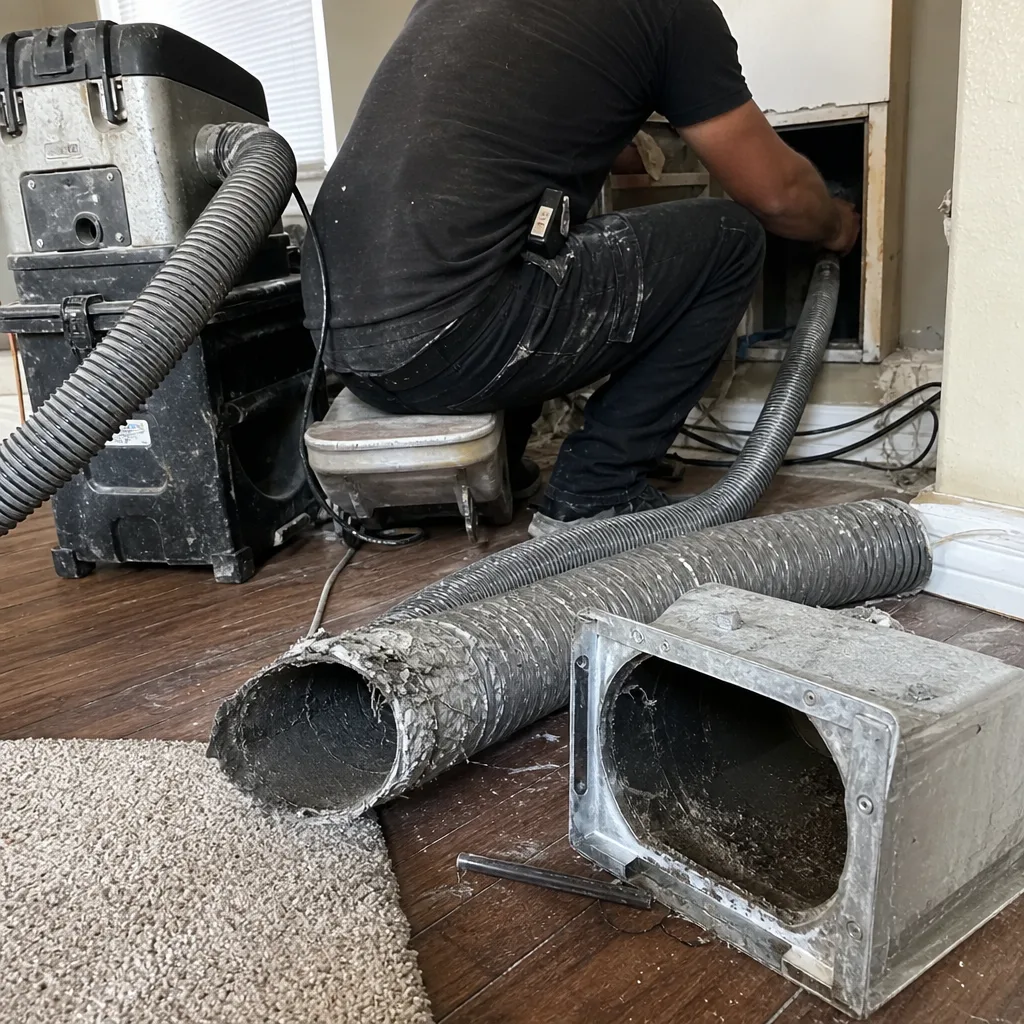 Before
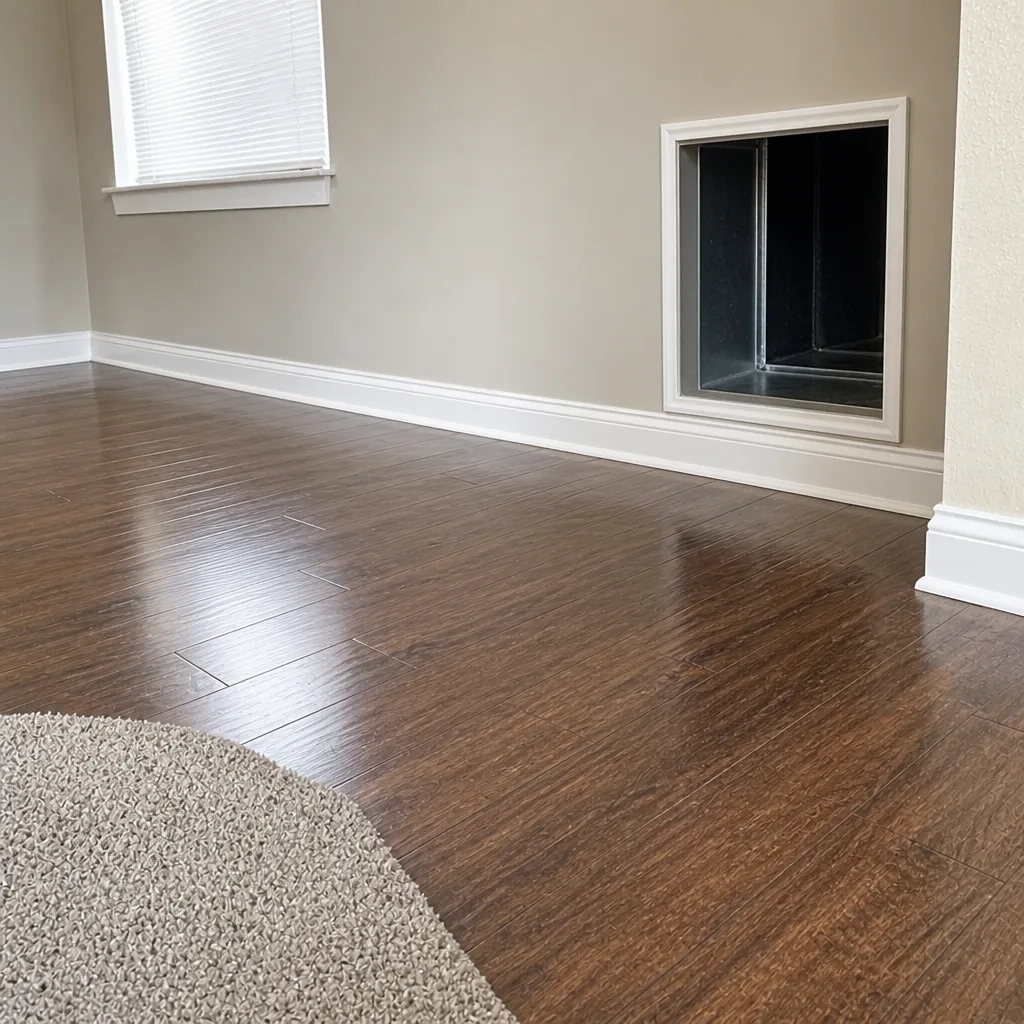 After
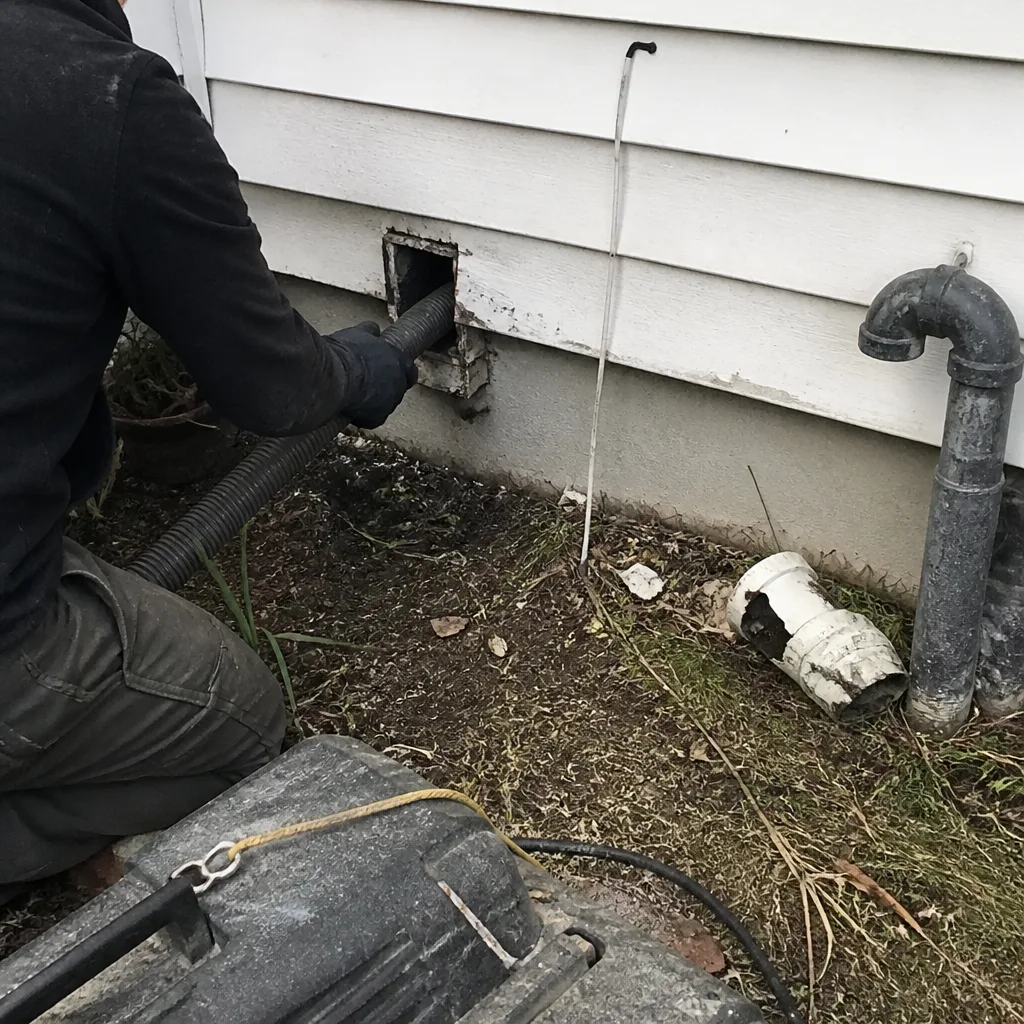 Before
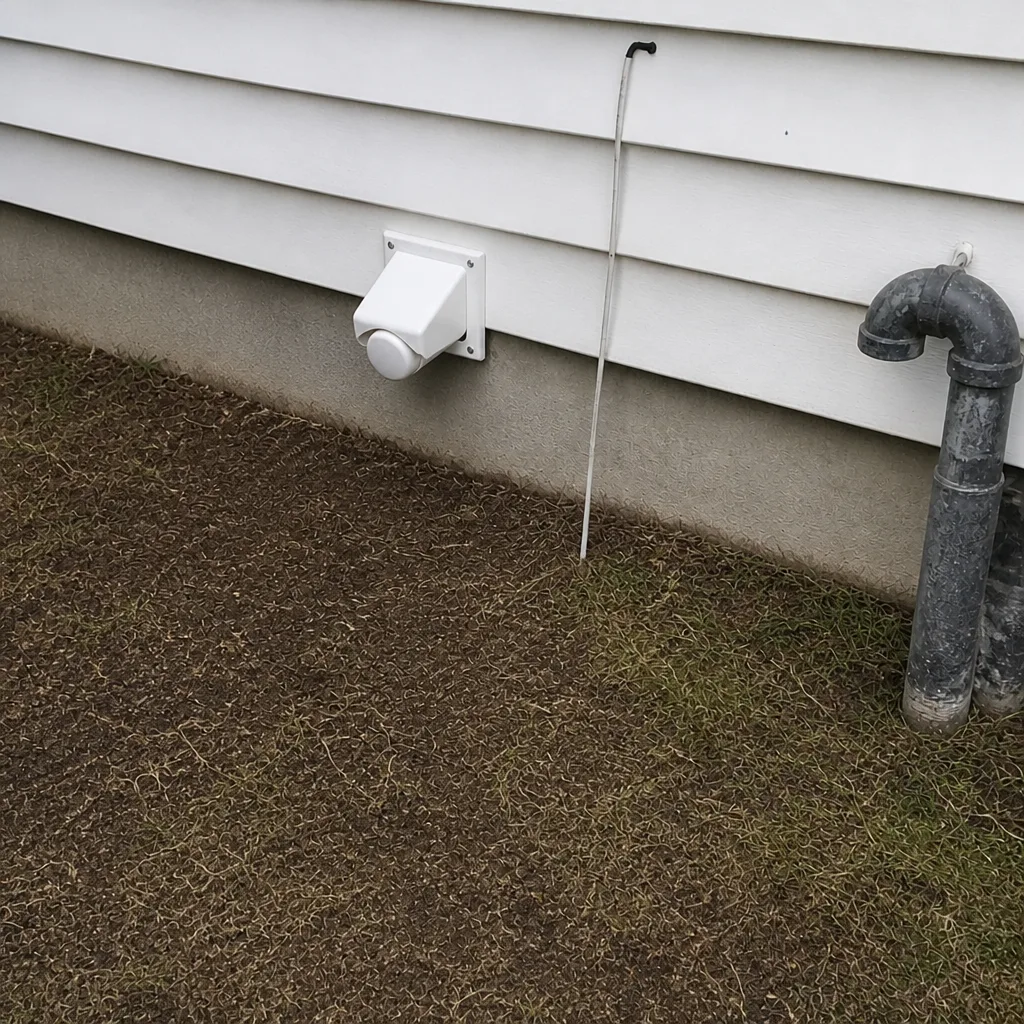 After
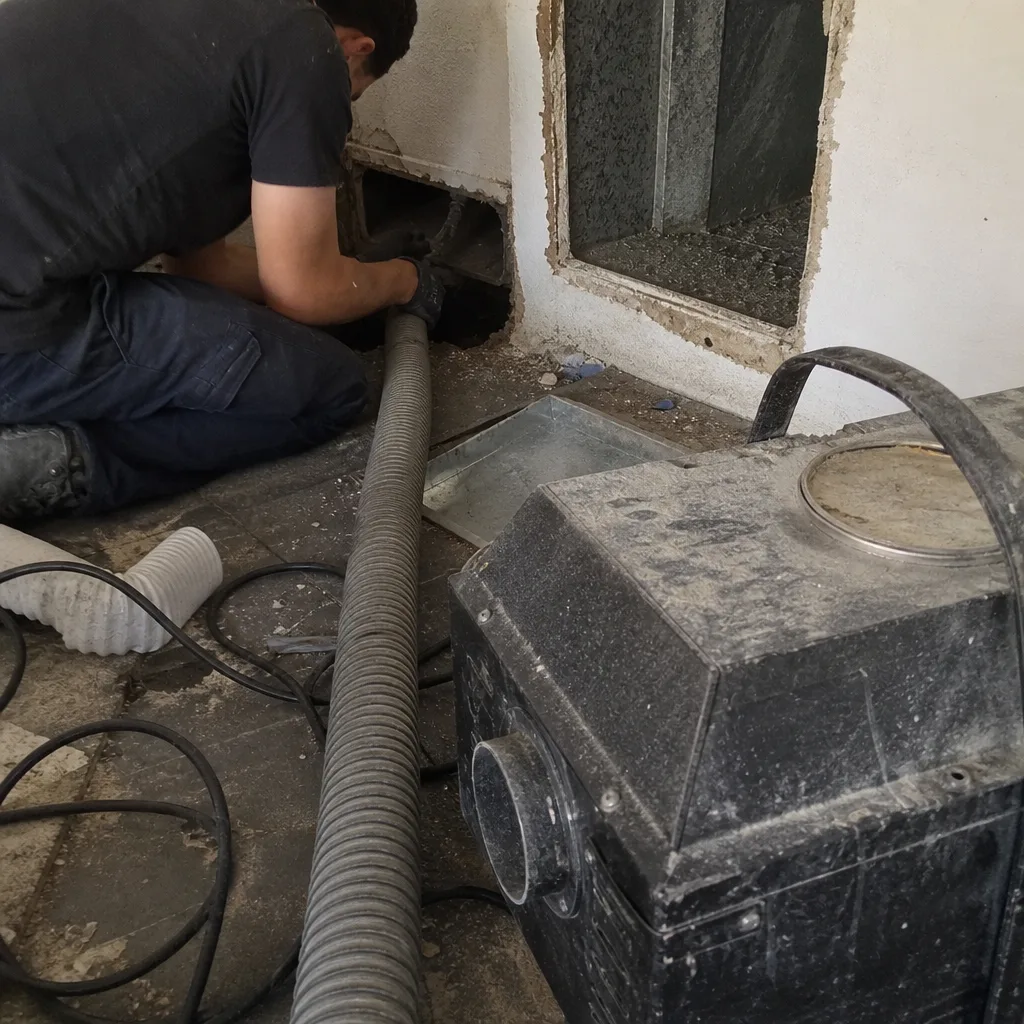 Before
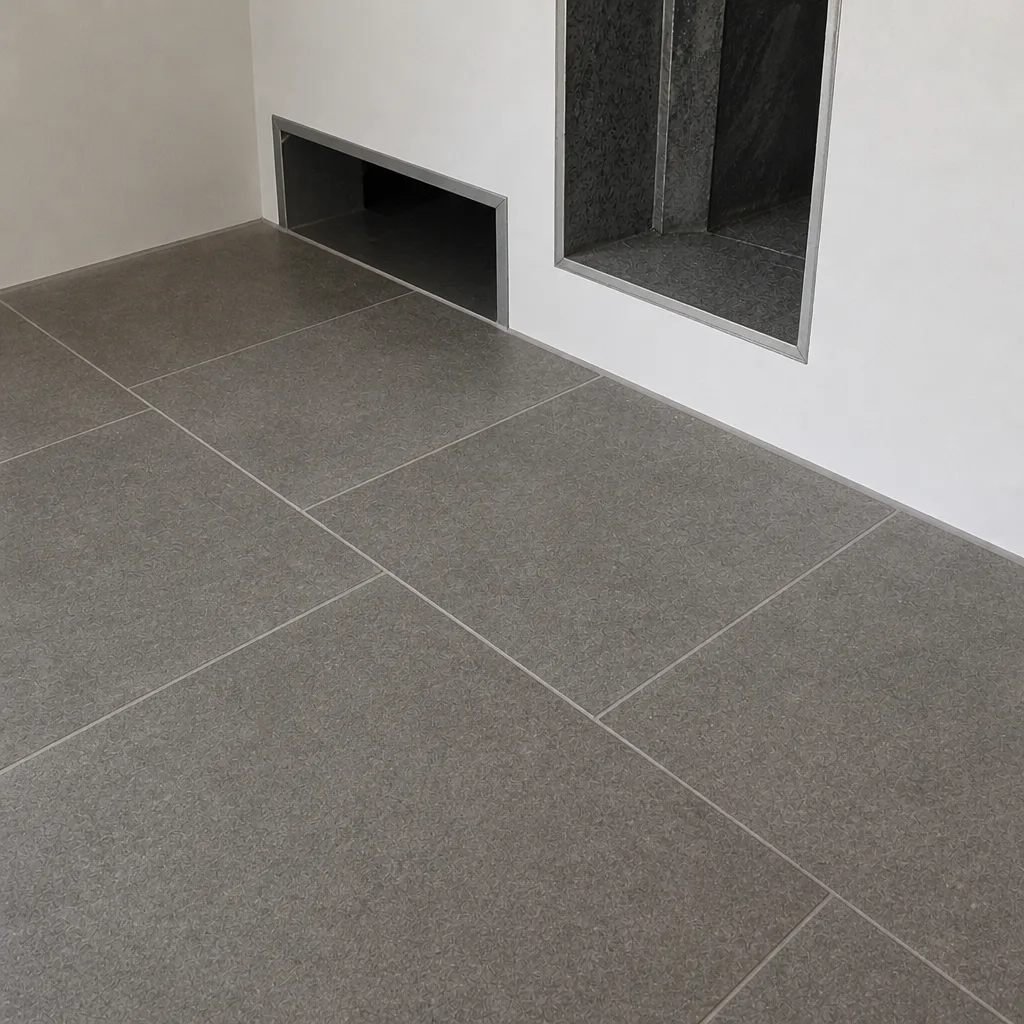 After